What Is AI Commerce? How AI Is Changing Ecommerce in 2026
Cartxis Team
Feb 3, 2026 • 5 min read
Introduction
Ecommerce has evolved rapidly over the last decade, but traditional platforms still rely heavily on manual work and static workflows. From writing product descriptions to pricing decisions and customer engagement, store owners often spend countless hours managing repetitive tasks. This is where AI Commerce comes in.
AI Commerce represents the next phase of ecommerce — where artificial intelligence actively assists, automates, and optimizes key parts of the online selling process.
What Is AI Commerce?
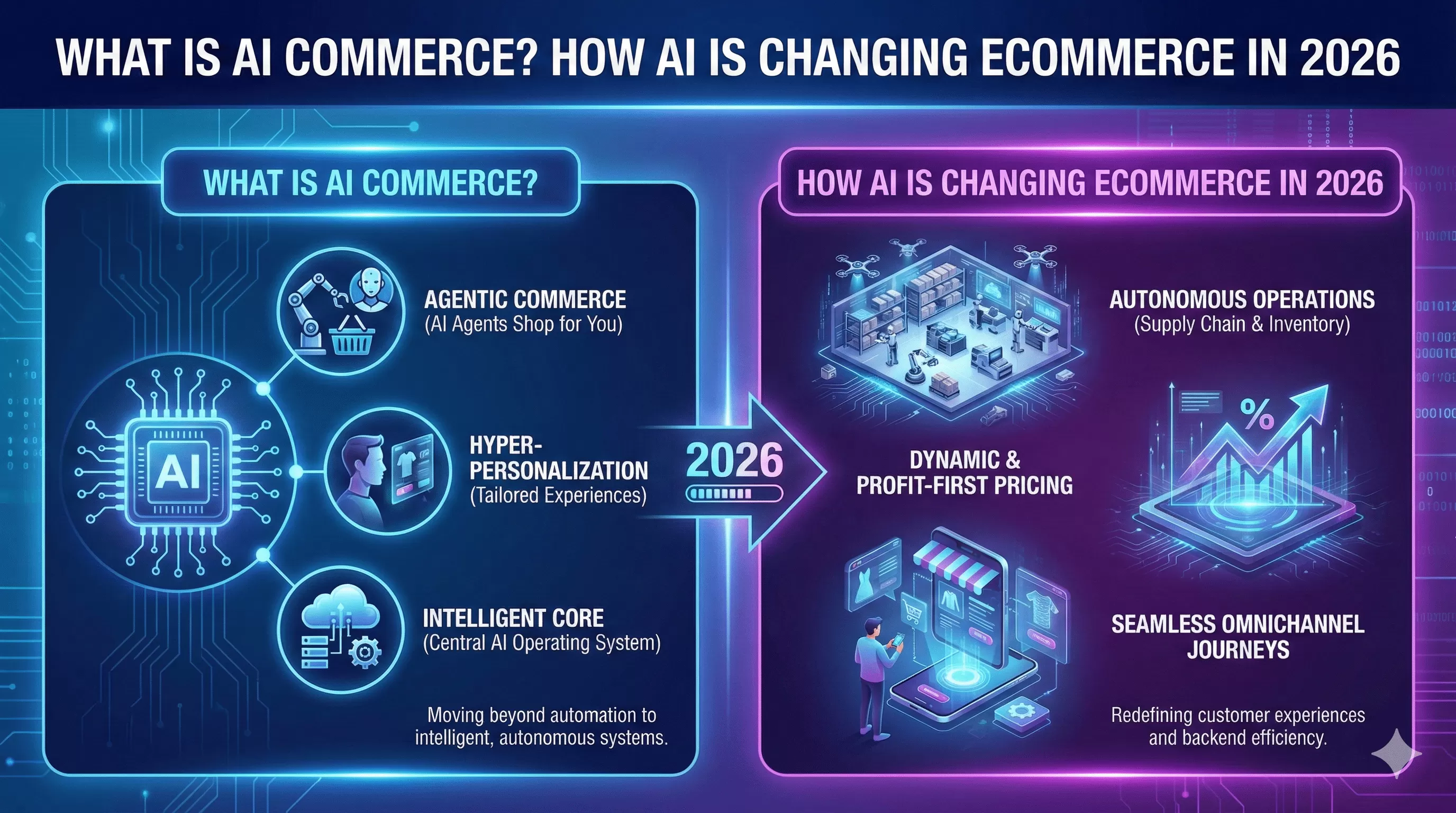
AI Commerce is the integration of artificial intelligence into ecommerce systems to automate decision-making, content creation, personalization, and operational tasks.
Instead of ecommerce platforms being passive tools, AI-powered platforms actively help merchants by:
Generating product content automatically
Analyzing pricing and competition
Personalizing customer experiences
Optimizing conversions using data-driven insights
In simple terms, AI Commerce allows ecommerce systems to think, learn, and assist rather than just store data.
AI Commerce vs Traditional Ecommerce
Traditional ecommerce platforms focus on basic workflows like product management, orders, and payments. While powerful, they require constant human input.
AI Commerce introduces intelligence into these workflows:
Product descriptions can be generated and optimized automatically
Prices can be adjusted based on competition and demand
Customer behavior can be analyzed in real time
Recommendations and content can adapt dynamically
This shift reduces manual effort and improves speed, accuracy, and scalability.
Key Areas Where AI Is Transforming Ecommerce
1. Product Content Automation
AI can generate high-quality product descriptions, specifications, and summaries at scale. This is especially useful for stores with large catalogs.
2. Pricing & Market Intelligence
AI analyzes competitor prices, demand trends, and historical data to suggest optimal pricing strategies.
3. Personalization & Customer Experience
AI tailors product recommendations, search results, and content based on individual customer behavior, improving engagement and conversion rates.
4. Operational Efficiency
From inventory forecasting to customer support automation, AI reduces repetitive tasks and human error.
Why AI Commerce Matters for Modern Businesses
As ecommerce competition increases, speed and intelligence become critical. Businesses that rely solely on manual workflows struggle to scale, while AI-enabled platforms adapt faster and make smarter decisions.
AI Commerce helps businesses:
Launch products faster
Reduce operational costs
Improve conversion rates
Deliver better customer experiences
Stay competitive in evolving markets
The Future of Ecommerce Is AI-Driven
AI Commerce is not a trend — it is a fundamental shift in how ecommerce platforms are built and operated. As AI models improve, ecommerce systems will become more autonomous, proactive, and intelligent.
Platforms that adopt AI early will gain a significant advantage in efficiency, scalability, and customer satisfaction.
Conclusion
AI Commerce is redefining ecommerce by turning platforms into intelligent assistants rather than static tools. By automating content, pricing, personalization, and decision-making, AI enables businesses to grow faster with less manual effort.
The future of ecommerce belongs to platforms that are AI-ready from the core.