How Payment Gateways Work in Ecommerce Platforms
Cartxis Team
Mar 11, 2026 • 5 min read
Introduction
Online payments are a fundamental part of ecommerce. When a customer completes a purchase, the payment must be processed securely and efficiently.
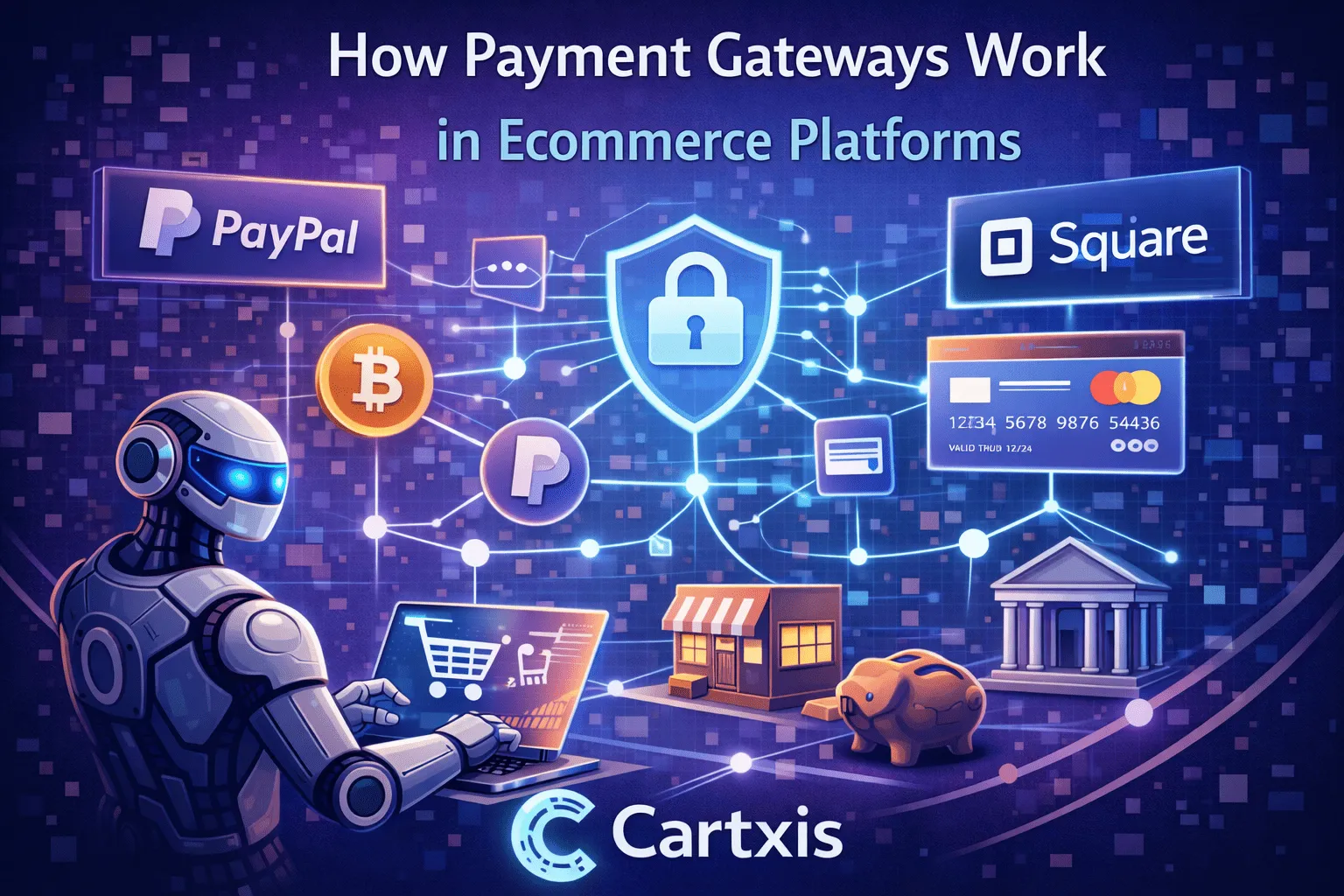
This process is handled through payment gateways, which connect ecommerce platforms with banks and financial networks.
Understanding how payment gateways work helps businesses choose the right payment setup for their online stores.
What Is a Payment Gateway?
A payment gateway is a service that processes online transactions between the customer and the merchant.
It acts as a secure bridge between:
The ecommerce store
The customer’s bank
The merchant’s bank
Payment gateways ensure that transaction data is transmitted safely during the checkout process.
Step-by-Step Payment Process
When a customer makes a purchase, several steps happen in the background.
Step 1: Customer Initiates Payment
The customer enters their payment details during checkout. This may include card details, UPI, or other payment methods.
Step 2: Payment Data Is Encrypted
The payment gateway encrypts the customer’s payment information to protect sensitive data during transmission.
Security protocols ensure the transaction remains safe.
Step 3: Transaction Authorization
The payment gateway sends the payment request to the customer’s bank for authorization.
The bank verifies whether the customer has sufficient funds and whether the transaction is valid.
Step 4: Approval or Rejection
The bank sends a response back through the payment gateway.
The transaction is either:
Approved
Declined
The ecommerce platform then displays the result to the customer.
Step 5: Payment Confirmation
If the transaction is approved, the payment is processed and the order is confirmed.
The ecommerce system records the transaction and the store owner can begin order processing.
Why Multiple Payment Gateways Matter
Relying on a single payment gateway can sometimes cause problems such as:
Transaction failures
Gateway downtime
Limited payment options
Supporting multiple gateways helps businesses provide alternative payment options and improve checkout reliability.
Platforms like Cartxis allow store owners to configure multiple payment gateways to improve payment flexibility.
Security in Payment Processing
Payment gateways are designed with strong security standards to protect customer data.
Common security practices include:
Data encryption
Secure payment protocols
Fraud detection systems
These measures ensure safe transactions for both customers and businesses.
Conclusion
Payment gateways play a critical role in ecommerce by securely processing transactions between customers and merchants.
Understanding how payment gateways work helps businesses design a smoother checkout experience and reduce payment-related issues.
With flexible payment gateway integration, ecommerce platforms can support reliable and secure online transactions.