Building an AI-Powered Ecommerce Platform: Architecture & Best Practices
Cartxis Team
Feb 9, 2026 • 5 min read
Introduction
Ecommerce platforms are no longer just transaction systems. Modern platforms are expected to generate content, personalize experiences, analyze data, and adapt in real time. To support these capabilities, ecommerce systems must be designed with AI at their core.
Building an AI-powered ecommerce platform requires a clear architecture that balances flexibility, scalability, and control.
Core Components of an AI-Powered Ecommerce Platform
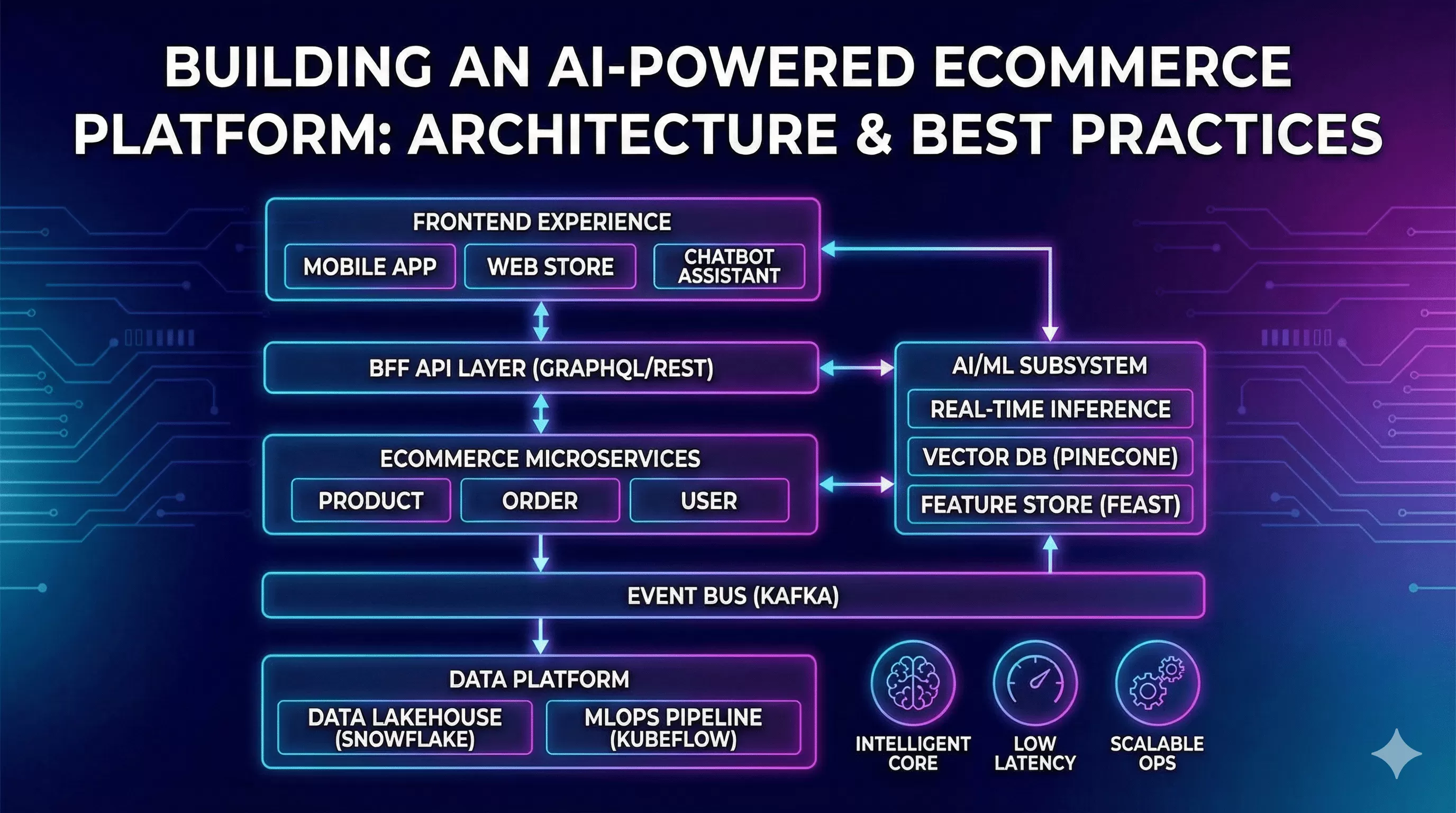
An AI-first ecommerce architecture typically consists of multiple interconnected layers, each responsible for a specific function.
1. Data Layer
The data layer is the foundation of any AI system. It includes:
Product data
Customer behavior and interactions
Orders, pricing, and inventory
External market and competitor data
Clean, structured, and accessible data is essential for effective AI decision-making.
2. AI Agent Layer
This is where intelligence lives. AI agents are designed to perform specific tasks such as:
Product content generation
Pricing optimization
Recommendation logic
Market analysis
Each agent operates independently but follows platform-level rules and permissions.
3. AI Gateway & API Layer
The AI gateway acts as a control layer between the platform and external AI models. It handles:
Model selection and routing
API key and usage tracking
Request validation and security
Cost and performance optimization
This layer ensures flexibility to switch or combine multiple AI models without rewriting core logic.
4. Business Logic & Workflow Layer
This layer connects AI outputs to real ecommerce actions. Examples include:
Updating product descriptions
Adjusting prices
Triggering recommendations
Generating reports and insights
Clear workflows prevent AI from acting unpredictably while maintaining automation benefits.
5. Frontend & Experience Layer
AI-powered insights must be presented clearly to users. This layer includes:
Admin dashboards for AI suggestions
Customer-facing personalization
Real-time analytics and alerts
Transparency and control are critical for trust and adoption.
Best Practices for Building AI Commerce Platforms
Design AI as Modular Components
Avoid tightly coupling AI logic with core ecommerce code. Modular agents are easier to update, replace, or disable.
Keep Humans in the Loop
Allow approvals, overrides, and manual controls — especially for pricing and critical actions.
Plan for Multi-Model Support
Relying on a single AI model limits flexibility. A model-agnostic architecture ensures long-term stability.
Focus on Observability
Track AI actions, performance, and outcomes to improve accuracy and accountability.
Why Open Architecture Matters
An open and extensible architecture allows ecommerce platforms to:
Integrate new AI capabilities quickly
Adapt to changing AI models and costs
Support custom business logic
Scale without rewriting the system
This is essential for long-term AI commerce success.
Conclusion
Building an AI-powered ecommerce platform is not about adding AI features on top of existing systems. It requires a thoughtful architecture where AI agents, data, and workflows work together seamlessly.
Platforms designed with AI at the core will define the future of ecommerce.